What Is Work For? A Review of Seth Godin’s The Song of Significance: A New Manifesto for Teams
Seth Godin argues that work becomes better when people feel it's significant, not just productive. His manifesto is a strong motivator, a refreshing read, but it leaves out the research to back up its claims. I’m here to fill that gap.
Seth Godin's The Song of Significance carries an essential message: we need to change how we think about, and ultimately measure, value in work. He argues that stakeholders at every level, including investors, client-customers, and, most especially, employees, will build a better business when they feel the work is significant. This manifesto is written for leaders and teams who wish to infuse their organizations with greater significance. But they would be wise to remember that this is a manifesto: it serves as a motivator, not a manual.
For Godin, significance can't be measured by traditional metrics like productivity. Quite the opposite: newfangled surveillance techniques will annihilate employees' hope of engaging in significant work. Managers can't keep extracting more out of people in perpetuity. And traditional boosters of morale, like better snacks or additional vacation days, won't change whether employees feel their work is significant. Significance is found when workers feel autonomy and ownership over their work.
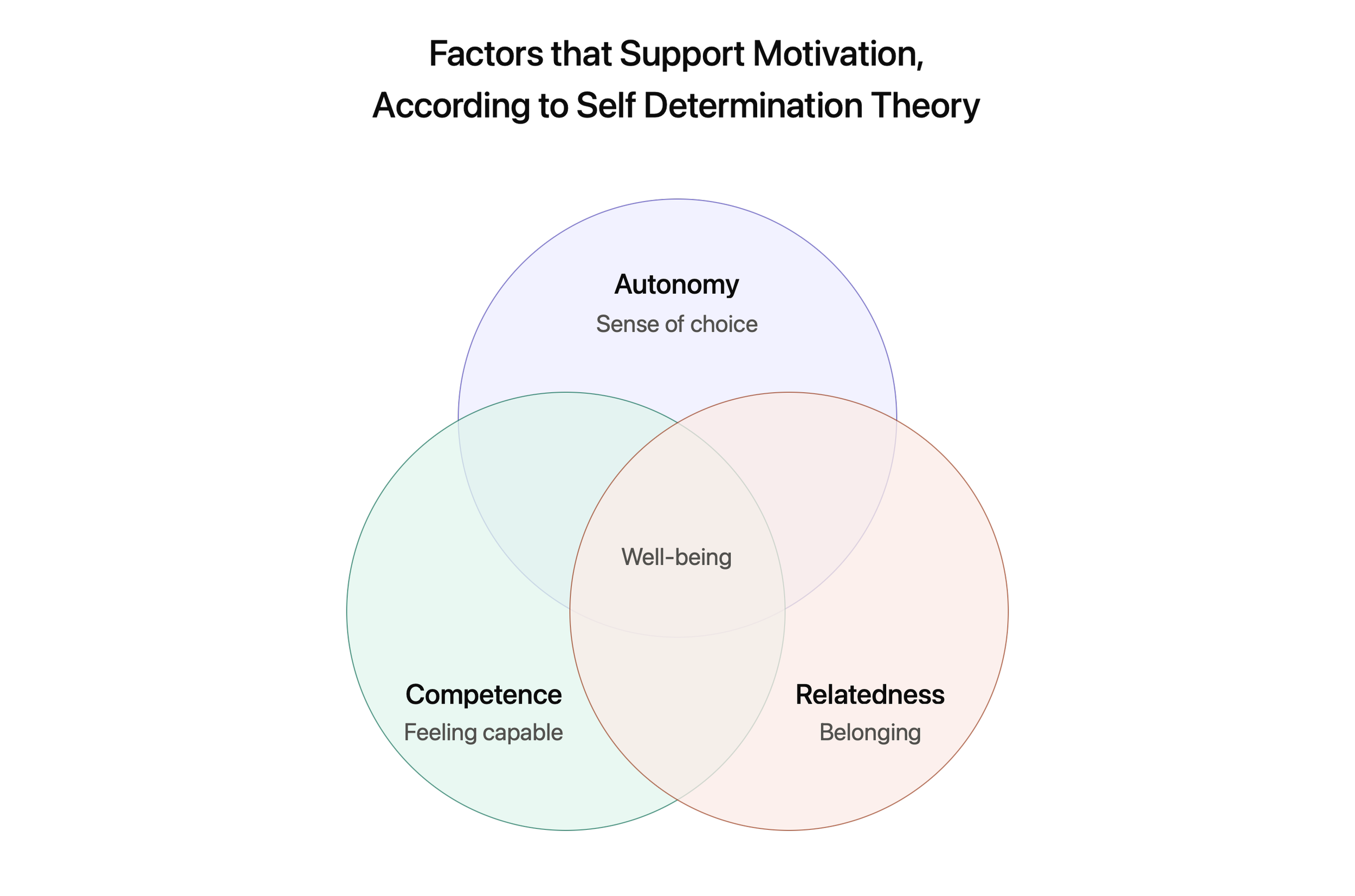
Godin borrows heavily from Self Determination Theory, without mentioning it.
Godin's book doesn't go into it, but his thesis rests on decades of evidence-based research into self-determination, the elements that boost or hinder motivation. Moving away from the reward-and-punishment model of motivation that once dominated psychology research (think scientists in lab coats shocking rats), researchers in this area have highlighted that humans do their best work when they are internally motivated. The ingredients of internal motivation are threefold. First, having a sense of autonomy: feeling that you are choosing your work, not being forced to comply. Second, knowing you are competent to complete the task at hand with the requisite skills. And third, feeling relatedness through a sense of belonging and connection to those you work with. All of this is woven into Godin's book, but the book leaves out the research on self-determination theory, not to mention the credit (a recent academic review here).
Godin argues that the enemy of significance is industrial management. Once useful, industrial management broke jobs into small, repetitive, and measurable tasks until those jobs became meaningless. By training for and rewarding obedience and compliance, and by measuring success through invasive surveillance, industrial management stands in the way of creative thinking and innovation. And it is creative thinking and innovation that are the byproducts of significance. This is unmentioned in the book, but self-determination theory researchers have shown it empirically, with daily creative output linked to a sense of autonomy the day before.
At Bloomberg, Godin has been told, they're measuring employees' keystrokes per minute. Looking further into his claim, I found that this is an open secret in the world of finance, especially after a 2013 scandal revealed Bloomberg was employing maximum surveillance on subscribers to Bloomberg's $20,000 terminals. Reading this detail took me back to my summer research internship between freshman and sophomore years at Stanford, when our professor would check our keystrokes on the old UNIX terminal systems. While chatting away and complaining about the lack of trust, my fellow research interns turned co-conspirators would ensure a meaningless keystroke every minute, sometimes "covering" for each other by keeping the keyboards warm.

The roughly $20,000 Bloomberg terminal.
Godin is right to sound the alarm. Digging in a bit, I found a meta-analysis of 70 independent samples that found digital surveillance is associated with increased stress and lower workplace satisfaction, while having no effect on performance. In fact, it is associated with increased counterproductive work behavior. Cue me and my co-conspirator undergrad buddies chatting away and hitting the space key.
Despite being thin on detail and prone to embellishment, I found The Song of Significance a refreshing read. One doesn't expect a book on business leadership to mention Hannah Arendt, perhaps the 20th century's most celebrated political philosopher, a refugee whose work examined totalitarianism, labor, and the banality of evil. But Godin does, even if he just references her in passing. Including Arendt is exactly the kind of cross-discipline thinking that Godin supports. Unfortunately, like much of the book, it falls short by not going deep enough to be, dare I say, significant and meaningful.

Hannah Arendt’s most famous essay.
The manifesto style is what makes the book energizing, but also what keeps it shallow. Academic research was mentioned, but no citations were provided, so I couldn't validate the claims. As a reader, I wanted simple things that perhaps ask too much of a manifesto: an index, a reference list, and data. Even in writing this review I longed for a table of contents to find passages (after downloading the digital version, I learned that it was included, but not in my hardback copy).
Godin offers little on how to implement more significant work. Maybe that's the point. Significance, unlike industrial management, isn't one-size-fits-all. Leaders can, and should, read The Song of Significance as a motivator, not a manual. How leaders enact that significance will be for another book.
References and further reading:
Putney, H., Silver, S., Silvia, P. J., Christensen, A. P., & Cotter, K. N. (2024). Why does creativity foster well-being? Autonomy, competence, and relatedness during everyday creative activities. Journal of Research in Personality, 113, Article 104552. https://doi.org/10.1016/j.jrp.2024.104552
Ryan, R. M., Duineveld, J. J., Di Domenico, S. I., Ryan, W. S., Steward, B. A., & Bradshaw, E. L. (2022). We know this much is (meta-analytically) true: A meta-review of meta-analytic findings evaluating self-determination theory. Psychological Bulletin, 148(11-12), 813–842. https://doi.org/10.1037/bul0000385
Siegel, R., König, C. J., & Lazar, V. (2022). The impact of electronic monitoring on employees' job satisfaction, stress, performance, and counterproductive work behavior: A meta-analysis. Computers in Human Behavior Reports, 8, Article 100227. https://doi.org/10.1016/j.chbr.2022.100227